
Normal was Never Neutral
The Stories We are Fed

Dear Curious Minds,
Last Saturday, in my first Tikanga class, I learned something that rearranged my understanding of everything: the word 'Māori' originally meant 'normal.' Just normal. Ordinary. The way things are.
Of course, it did. Before colonisation, indigenous ways of being weren't 'alternative' or 'traditional'; they were simply how life worked. It was only when another system muscled in and declared itself civilisation that the original normal became othered, exotic, something to be thwarted until it was weak enough to be preserved in museums rather than lived.
This revelation was still rattling around my head when I spent the weekend watching three films that, in different ways, are all about who gets to define normal. Thank you for being here, I appreciate you.
The Environmental Hero Complex
First: Ocean, that visually stunning David Attenborough documentary I had been putting off until I had the right crowd and reason to watch it. There was a special screening in Christchurch which included a Q&A with WWF and conservation leaders. Great, that's reason enough for me, as I know things could get interesting.
Right after the WWF CEO called for ending bottom-trawling and quota-based fishing, a well-intentioned audience member raised his hand with a question so perfectly ironic I wondered if he'd planned it.
His question: While Europe and countries like New Zealand have "made progress" banning destructive fishing practices, how should "we" educate those "developing countries" that are "far behind where we are"?
I wish I could be more sympathetic to the narrative of these questions but I often don’t have the energy anymore with the entire colonial mindset in a single question. The assumption that European fishing practices represent progress. That communities who've sustainably fished their waters for millennia need educating by the very nations whose industrial fleets destroyed those ecosystems in the first place.
This question, asked before we'd even seen the film, perfectly encapsulated why Ocean resonates so strongly with Anglo audiences, perhaps like many other Hollywood hero movies.
Yes, it's visually breathtaking - shot across every ocean over several years. But despite some harrowing imagery, the film's real focus is ensuring viewers leave feeling optimistic about their role as educators and saviours. The caring, enlightened audience, as the select few, becomes the hero for the planet.
There is one sentence from Attenborough when he briefly acknowledges that a small number of wealthy nations drive most commercial fishing damage, even calling it "modern-day colonisation." But having named the beast, the film immediately pivots away from any meaningful reckoning with that reality. Given his British nationality, is it too much to expect a tiniest elaboration on Britain’s role in colonisation and its continuing influence on the commonwealth nations’ legislations and corporations' deeply damaging role?
The solutions Ocean champions (e.g. expanded marine reserves, ending bottom-trawling, taking only what communities need) are exactly how indigenous peoples fished before colonial capitalism ravaged their waters. These aren't innovations; they're indigenous knowledge repackaged for Western frameworks.
To describe these communities as "behind" European practices is breathtakingly insulting: like claiming traditional builders are "behind" because they haven't adopted the construction methods that are currently collapsing your house.
But here's what really grated: the film's solutions sidestep any discussion of reparations or redistribution. It's not enough to simply stop destroying marine ecosystems when entire communities have been left with depleted, polluted waters while colonial nations built their wealth through extraction.
The bar is tragically low when we applaud a prominent British naturalist for simply naming colonisation on camera, especially when the film offers no meaningful accountability for that diagnosis.
Of course, loss aversion means most viewers will recoil from discussions of reparations. It's so much more comfortable to focus on individual consumption choices than systemic redistribution. Which is exactly why Ocean's narrative works; it lets audiences feel virtuous without threatening their material comfort.
Ocean succeeds as a visual spectacular but fails as a reckoning. It's environmental storytelling that centres the coloniser as saviour while positioning the colonised as students. It’s a fairly predictable narrative, which I could have watched with the sound off.
Here’s something I always found quite interesting. Advocacy is deeply political, yet so many advocates or advocacy organisations describe themselves as apolitical and keep short of naming the elephant in the room (should it be the whale in the room, in this case?). Attenborough is now lauded as the voice of environmental conscience, despite having built his fame and considerable fortune for decades while largely sidestepping the very environmental crises he now addresses. As recent analysis shows, his evolution from nature spectacle to environmental advocate is relatively recent, and we're supposed to celebrate this awakening as visionary rather than overdue.
"Times were different then," we're told when critiquing his decades of beautiful but apolitical nature documentaries. Fair enough, and we love people growing and learning. But as I walk home from the film I question whether women leaders are afforded similar grace and forgiveness over time? The luxury of evolving their positions without career-ending scrutiny?
They might be, if they survived public criticism long enough to be continuously booked for prestigious roles across decades despite past missteps. Oh wait, that still doesn't happen. Attenborough gets to be the wise elder statesman, finally speaking truth to power in his nineties.
Meanwhile, transformational leaders like Ardern get pilloried for not being perfect from day one, and certainly don't get multiple decades to find their voice on contentious issues while maintaining their platform and prestige.
The Impossibility of Transformational Leadership
From environmental heroism to political impossibility - the stories we tell about leadership reveal just as much about whose normal we're protecting.
Prime Minister had its domestic premiere at NZIFF, playing to all 2,400 seats at a packed Civic Theatre. Apparently, the film set records as the fastest to sell out in some regional cinemas' history, which tells you something about our collective need to process what we'd just lived through.
A surprise video message from Dame Ardern opened the screening. There she was, happysad about missing the premiere. There I was, happysad she's not serving her third term as our PM.
As she noted in her message, this was our story as much as hers; that's what made it so revealing about the standards we apply to transformational leadership. The film revisited those intense years…. Christchurch, White Island, COVID, the Parliament occupation…all the ridiculous and heartbreaking moments of being human while trying to lead.
What struck me wasn't just the intimacy of Clarke Gayford's footage, but what it revealed about the impossible standards applied to leaders who dare to do politics differently. Ardern's approach of kindness, collaborationg, focusing on wellbeing over GDP was constantly framed as experimental rather than simply... good governance.
There was one particular scene that made the entire theatre of 2,400 people erupt in unison jeering, and not at Ardern. The collective anger was so visceral, so perfectly timed, it was as if we'd all been waiting years to express it together. You'll have to see the film to guess which scene and who earned that reaction, but it revealed something crucial: we knew, even as it was happening, that she was being held to standards we will go on to regret and sorely miss.
The intimate footage makes viscerally clear what I've long wondered: how do women in politics remain sane when the very qualities that make them effective leaders are treated as weaknesses?
Regardless of policy disagreements, watching this film makes clear that Ardern was held to standards that no male leader has ever faced, and certainly not the current lot. The contrast with our current government's cavalier approach to accountability makes the double standard impossible to ignore. We demanded perfection from transformational leadership while accepting less than mediocrity from traditional power.
The fact that 2,400 people showed up on a Saturday night, that regional cinemas sold out faster than ever, that we all jeered at the exact moment… it suggests we're collectively grappling with what we lost, and what we allowed to be lost.
Which brings me to what authentic storytelling actually looks like when it's not trying to make anyone comfortable.
Stories That Don't Need You at the Centre
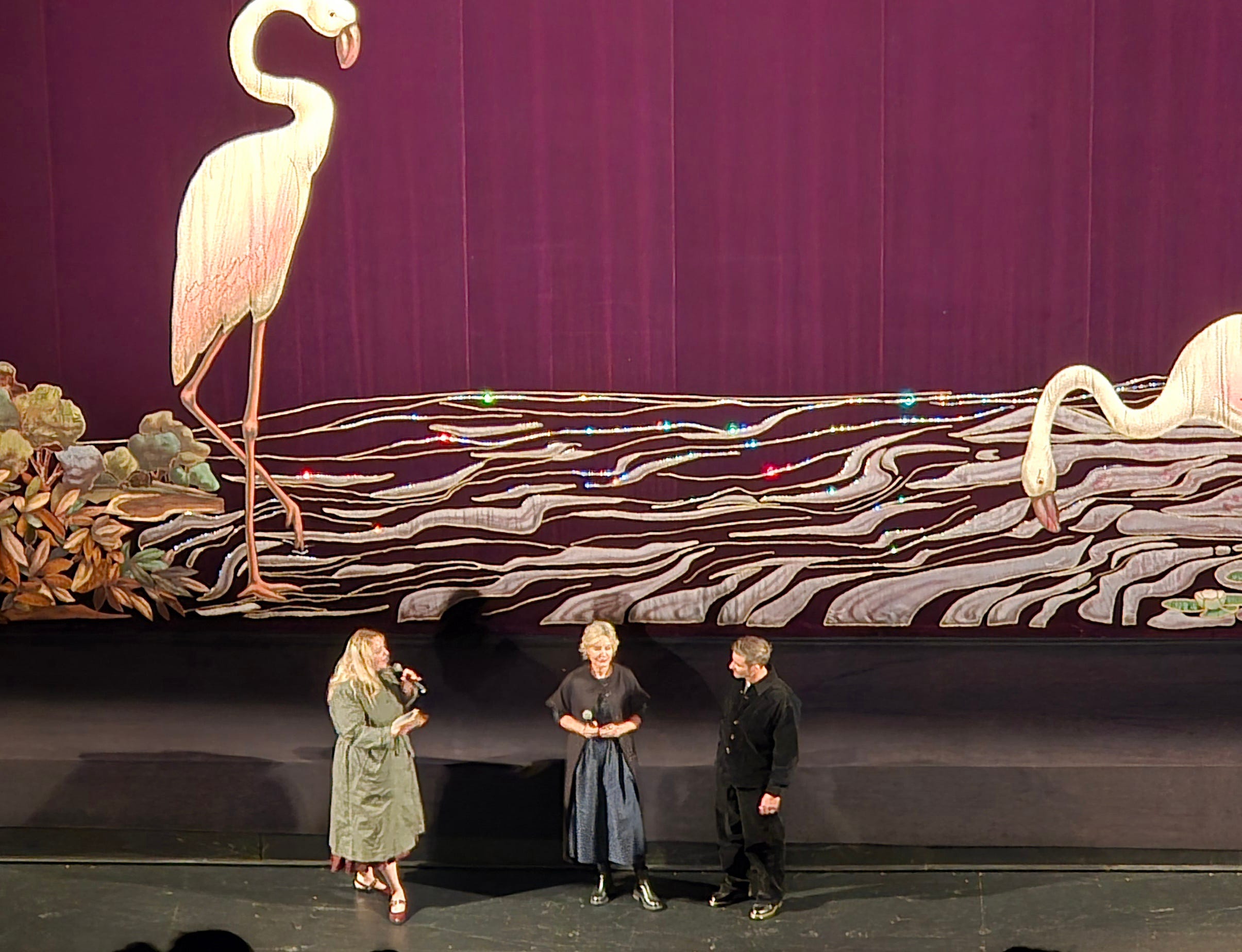
Chrysanthemum, by contrast, was a masterpiece that didn't give a damn about anyone's comfort.
I immediately went looking for everything else Jolin Lee has made.
Without spoiling anything: every element was crafted to perfection, avoiding the lazy emotional shortcuts that lesser filmmakers rely on. No swelling orchestral cues to tell you how to feel. Just devastating precision.
It was such a powerful cinematic experience that I literally had to squeeze my hand over my mouth quite hard so that I could make it through the rest of the screening without making a scene.
Here was storytelling that didn't centre white comfort or colonial narratives. No explanation for the uninitiated, no gentle hand-holding through cultural context. Lee trusts their audience to do the work of understanding, and the result is devastating, authentic, and necessary.
This is what happens when filmmakers aren't trying to be palatable to dominant culture. When they're not educating or explaining or making themselves consumable. Just telling their truth with precision and power.
Who Gets to Be Normal
Three films, three different relationships with power and storytelling. Ocean asks us to be heroes while keeping systems intact. Prime Minister reveals the impossible standards we apply to leaders who threaten the status quo. Chrysanthemum shows us what's possible when storytellers stop centring dominant comfort.
Sitting in that Tikanga class, learning that 'normal' was never neutral, I realised something about the stories we choose to consume. They don't just reflect our worldview but they shape whose futures we can imagine.
When environmental documentaries position indigenous knowledge as primitive rather than advanced, we limit our solutions to technocratic fixes that preserve colonial wealth distribution. When we demand perfection from transformational leaders while accepting incompetence from traditional power, we ensure transformation remains impossible. When we only fund stories that explain themselves to dominant culture, we impoverish everyone's imagination.
Once you notice whose normal gets treated as universal, you can't unknow it. And once you start actively seeking stories that don't centre your comfort (stories like Chrysanthemum), you realise how much more interesting the world becomes when it's not filtered through the same tired lens.
The question isn't whether these alternative stories exist. They do, and they're brilliant. The question is: whose norms are we willing to challenge in order to see them?
Because until we stop treating colonial capitalism as civilisation and start recognising it as one deeply flawed experiment among many, we'll keep mistaking education for oppression, comfort for progress, and our own limitations for universal truth. That's the real provocation these three films offer: not that we need better stories, but that we need to get comfortable with stories that don't need us at the centre.
It all comes back to that one word from my Tikanga class. Who gets to decide what’s normal? The stories we let into our lives are a powerful place to start finding the answer.

I know it’s hard to commit to monthly subscriptions. So it would mean a lot to me if you could support this mahi with a one-off virtual coffee if you enjoyed this entangled feminist rage and grief
I hadn't thought about Ocean in that way I'm ashamed to say - but now you've said it it's blindingly obvious. The indigenous communities in the film are depicted as the 'abnormal' - and if it isn't intentionally done so that's almost worst than if it was.
It's definitely a movie that is aiming to hit the mass in the middle - so it's very intentionally apolitical, and ignores any conversations around systems change/historical acknowledgements and really even climate change - things the producers know will get people's backs up. I understand why they chose to do it that way, but it is a missed opportunity. But then, as you point out, it has always been this way.
I found the question about developing nations so, so, so off base (the CEO you mention and I had a chat about it afterwards) as they don't need 'bringing along'. They've been there the whole time!! I thought this was surely common knowledge - but there is the constant finger pointing going on in this whole 'eco' conversation isn't there. 'Why should we do anything, look what they are doing?' Completely ignoring the actual causes of these many crises!! Maddening.
Another great read. Thanks :)
Keep it up, Stella, I love the stuff you write, Tur