
Surprises for accessibility
Goodwill is not a building code

Dear Curious Minds,
We did it, you did it! With your donation, sharing the news, and being here with me on Entangled Curiosities so I can back myself, you’ve helped us reach our fundraising goal! I am carried by all of your aroha and strength. Thank you for being here, I appreciate you.
I spent most of last week at film and screen industry events, the majority of them alongside Paula Whetu Jones.
Many of you may know her through her work such as Gang Girls, Waru, Whina and The Doctor’s Wife. I also mentioned her in my last post about how Paula invited me to The Eternal City. What the page can’t convey is what a room does when she enters it. Over three days, I watched a steady procession of people, including commissioners, industry veterans, and emerging directors who knew her work, make their way over to say hello. It didn’t take much brainpower for me to notice how well-known she is in this industry.
Yet, the venue was not prepared for how she’d get onto the stage. As a scheduled speaker because she was one of the pitch finalists.
The organisers apologised profusely and meant it. This isn’t about them. I want to be clear about that early, because the story is more important when it’s not about a singled person’s failure.
A portable ramp from Bunnings is a few hundred dollars. Should that be too hard for a venue to keep such in storage, which might come in handy for a while? I just purchased one online mid-event after hearing the hotel doesn’t have an option for a ramp. The irony of the plot thickens: the online order was immediately cancelled by the store without much explanation, even though the product was showing as available in multiple stores.
We were there to pitch a documentary about disabled dancers, about what a body does when the world stops telling it what it can’t. And we couldn’t get the producer onto the stage. Not without carrying her, which we refused, or without two people aiding her and one person lifting her wheelchair onto the stage, which had to be the solution in the end.
It looked like a provocation staged to fit the film’s premise. It was just Monday afternoon in Auckland.
What interests me is the quieter system that sits behind the dramatic failure. Because these kinds of failures don’t need bad intentions to produce bad outcomes. A city designed around one kind of body moving one kind of way. A venue that ticks every legal compliance box and still doesn’t think to ask. The house someone renovates without once wondering whether the person living in it fifteen years from now, or who ends up with an injury, might move through it differently.
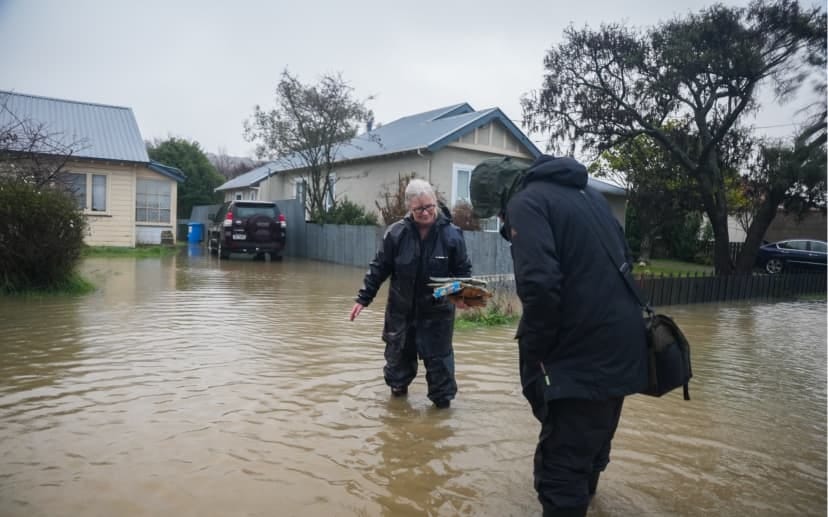
The stakes of that default aren’t abstract, and this week they weren’t hypothetical. Since the weekend, the South Island has been underwater in places. In North Oamaru, a woman named Raylene Mulligan went to her sister’s house to help evacuate her two nephews, one blind, one a wheelchair user, as the water rose. She couldn’t get them out. RNZ photographed her outside the house.
The people least equipped to absorb the shock absorbed the most of it. Don’t call that bad luck, because it isn’t. It’s decades of reasonable-seeming decisions, each one made by someone who wasn’t picturing Raylene Mulligan’s nephews when the water came.
Dr Bridget Doran, whose work on transport and sustainability is some of the best analysis in this sector full of greenwash and fluff, has a phrase for what our systems refuse to see: trips not made. We measure crashes, congestion, emissions — everything that happens. We measure almost nothing about the journeys nobody could attempt, because they were too expensive, too painful, or plain impossible. Whole lives of not-going, uncounted. Her white paper A Just Now: Redux is worth your time if that idea catches, the way it caught me.
Disability and mobility aren’t edge cases in that story. They’re the whole of it.
So let me tell you about something that went right.
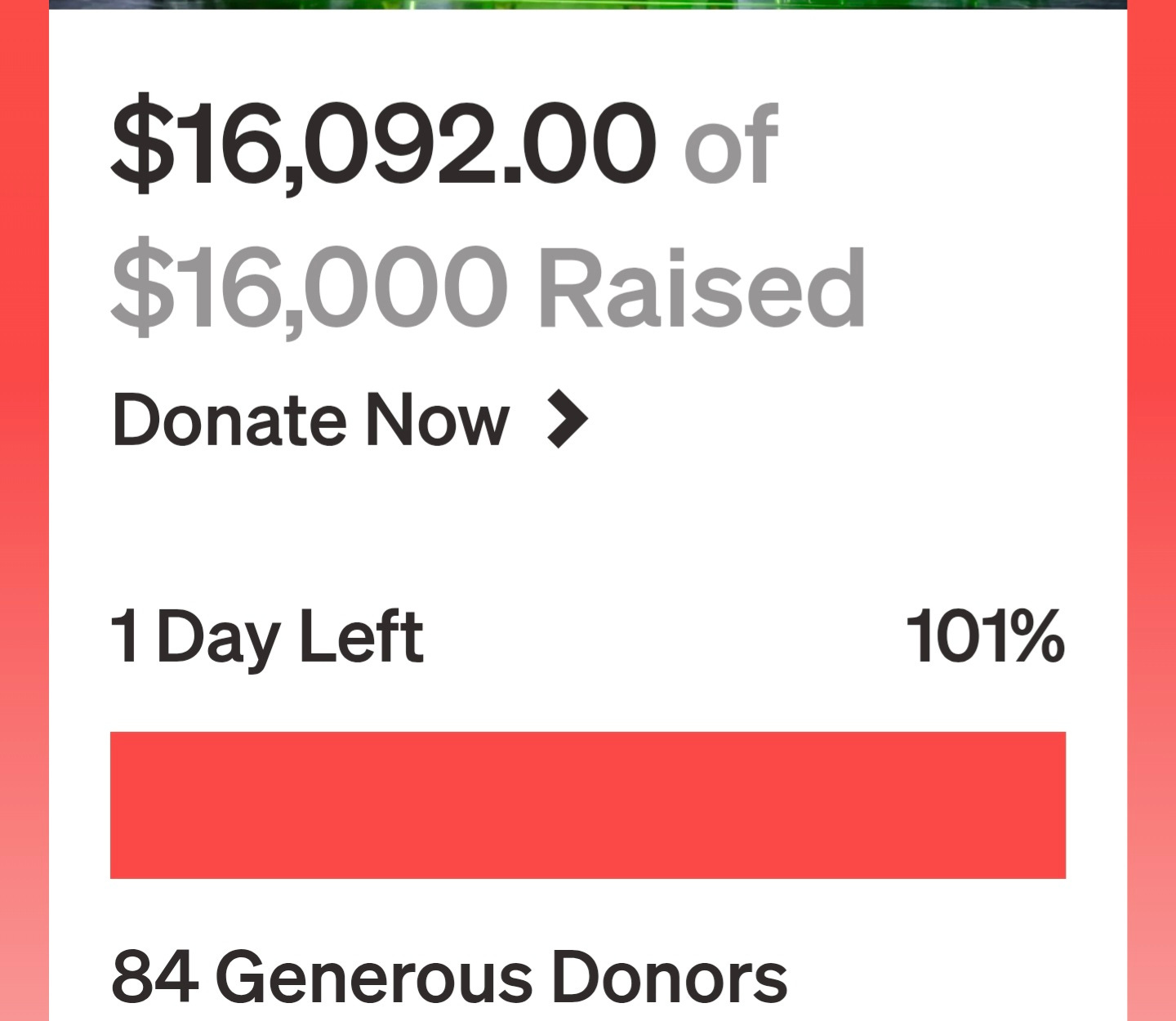
The Eternal City, the documentary I’ve thrown myself behind which about a Taiwanese dance company of disabled dancers, closed its crowdfunding today at 101% with $16,142 raised. With about an hour to go, we were still short, a couple of hundred dollars off the line. With an all-or-nothing mechanism where you only get the fund if you reach 100% of the target, it’s certainly anxiety-inducing stuff. But I’ve spent many years in fundraising, and I know people will come through because we just procrastinate until the last minute.
I need to be honest about what that takes, because I’ve watched a good deal of the creative sector last week openly accept that this work run on passion and unpaid hours. I don’t. But that’s a whole other post, and you already know how I feel about passion tax.
Fundraising is not for the faint-hearted. Every pledge is built on trust, commercial nous, and on whether someone can see what connects them to the thing you’re trying to make. I’ve been doing it for years, past the heart palpitations and the occasional rage, and I keep coming back, because once you’ve navigated the mountain a few times, you want the next one. Especially when you can see the line down it that other people may have missed.
To everyone who pledged: you did the thing the stage couldn’t. You made room.
Here’s where I want to point us next.
The Eternal City proved that a community can be asked to carry something and say yes. But a crowdfunding campaign shouldn’t be how a country funds dignity, and goodwill shouldn’t be how disabled people get onto stages, into buildings, or out of floodwater.
There’s an election coming. 7 Nov feels both too far away and too soon (because of the prep & mobilisation that needs to be done for it!). I’ve been learning a lot from many advocates, commentators, and writers who have walked this path much longer than I have on the Disability Support Services Bill. As of today, there is another member’s bill that we need to pay attention to for our disabled community. Surprisingly, it is from New Zealand First proposing accessibility standards built in at the design stage. I haven’t read that bill properly yet, and I’m holding off on the verdict because that certainly wasn’t a disability champion I saw coming. But two bills at once tell you something: accessibility is finally a live political question. Our job over the next few months is to keep it there.
Not as a niche concern for the people it directly affects. As a question every party gets asked, on the record: what will you actually build, and who for? I’d like us to walk into this election refusing to let accessibility stay the thing everyone agrees is important, and no one is ever made to pay for.
I’ll be reading the bill and some white papers on the subject, and writing about them here. The film was the beginning of this for me, not the end of it.
The rain’s meant to ease by Matariki. As good a time as any to ask who we’re building the next year for.
With a list of Auckland venues that still haven’t sorted their ramp situation and one very tired but stubbornly intact set of convictions,
Stella